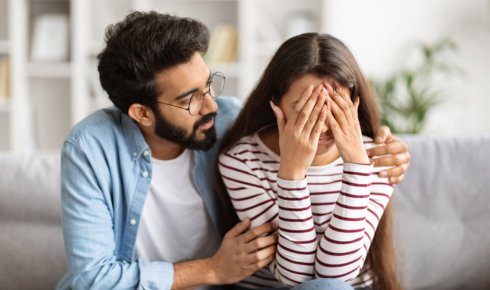
Most people expect relationships to feel reassuring. When they don’t, when closeness triggers doubt, hypervigilance, or a persistent fear of losing the other person, it can be confusing and exhausting for everyone involved.
Relationship anxiety is more common than people realise, and it often has very little to do with the relationship itself.
What relationship anxiety actually looks like
It doesn’t always present as obvious jealousy or clinginess. More often, it shows up as:
- Constantly seeking reassurance but never quite feeling settled by it
- Overanalysing your partner’s tone, words, or silence for hidden meaning
- Assuming conflict means the relationship is ending
- Pulling away emotionally to protect yourself from potential rejection
- Feeling guilty for not being “happy enough” in a relationship that looks fine on paper
- Catastrophising minor disagreements into evidence of incompatibility
The pattern is often cyclical. Anxiety spikes, reassurance is sought, relief is brief, and then the anxiety returns — sometimes worse.
Where it tends to come from
Relationship anxiety rarely appears out of nowhere. It’s frequently rooted in earlier experiences: inconsistent caregiving in childhood, past relationships where trust was broken, or a general attachment pattern that makes intimacy feel unsafe.
Anxious attachment, in particular, creates a dynamic where closeness is deeply desired but also deeply threatening. The very thing you want most is the thing that feels most dangerous to rely on.
This doesn’t mean past experiences have determined your future. It means there’s something worth understanding rather than simply managing.
What makes it harder to address
One of the trickiest aspects of relationship anxiety is that reassurance-seeking provides real, if temporary, relief. This makes it self-reinforcing. Each time anxiety is soothed by a partner’s response, the brain learns that seeking reassurance works — and repeats the cycle.
Over time this can strain even strong relationships. Partners can begin to feel like they’re never enough, no matter how much they offer.
What actually helps
Notice the pattern before reacting to it. When anxiety spikes, the question worth asking isn’t “is my partner pulling away?” but “what am I responding to right now?” Slowing down between the feeling and the action creates room to choose a different response.
Reduce reassurance-seeking gradually. This feels counterintuitive, but tolerating uncertainty in small doses is how anxious attachment loosens its grip over time.
Work on self-soothing. Developing ways to regulate your own emotional state, rather than outsourcing that regulation to a partner, shifts the dynamic meaningfully.
Address the underlying patterns, not just the symptoms. Surface-level coping strategies help but rarely resolve what’s driving the anxiety in the first place.
That last point is where professional support tends to make the most sustained difference. Mental Health Counselling can help you identify the attachment patterns shaping your relationships and build a more stable foundation — not just for your current relationship, but for how you relate to people generally.
Relationship anxiety isn’t a character flaw. It’s a pattern. And patterns, with the right support, can change.